FAQ
For annual multi trip policies - If, once you have left the United Kingdom and before the end of the period of cover, you decide you want to extend your policy, the single trip limit can be extended to 45, 60 or 90 days subject to the payment of an additional premium.
In the event of a trip being planned that should start within, though end outside of the policy period (the Policy expiry date), cover may be extended, so long as Insurers are advised prior to the commencement of the trip. Any extension in cover will be subject to the payment of an additional premium.
Our insurers' underwriting license only allows us to insure residents of the UK travelling from and returning to the UK - the whole trip must be insured on one policy to be covered and must be purchased before UK departure.
Definitions:
Home: The address where you live in the United Kingdom. You must have your main home in the United Kingdom, the Channel Islands or Isle of Man.
Resident : A person who permanently resides in an eligible UK country and is registered with a medical practitioner in their home UK country.
Permanent Residency: Any individual that has been legally resident in an eligible UK country for no less than 183 days and is registered with a medical practitioner.
You should be registered with the NHS and qualify for repatriation back into the UK in the event of an emergency medical repatriation. Repatriation can only be to the UK so you must qualify for entry in to the NHS care system.
• You must always take proper care of your belongings and not leave things, particularly valuables, unattended. Leaving something behind is not covered.
• Valuables like cameras, jewellery, money (see definitions) are not covered when unattended except in locked accommodation.
• Fragile items are not covered against accidental damage.
• For equipment, we specifically exclude damage whilst being used for racing or competition.
• Damage in use of mountain bikes and cracking, scratching and denting of canoes or kayaks in use are not covered.
https://www.snowcard.co.uk/personal-belongings-and-equipment
• The health statement is relevant to the cancellation section as well as to the medical expenses section.
• You will need a doctor’s certificate to make a cancellation claim.
• Familiarise yourself with the definition of a close relative.
• We do not cover the financial failure of your travel agent, tour operator or airline.
• Ensure you only book travel services with a company holding a bond to protect your money.
• If you have to cut short a trip, you must seek agreement with the insurer before making return home arrangements.
https://www.snowcard.co.uk/trip-cancellation-and-travel-delay
'Off Piste' refers to any area that is not groomed or prepared as a formal ski run on the ski resort map.
Areas that fall between pistes that are skied, have developed into mogul fields or used as routes to access other ski areas are 'off piste' and require the appropriate level of cover.
Tracks or links between pistes used to access lift stations etc are not regarded as 'off piste'
Skiing couloirs, back country or gated off piste areas is 'off piste' and requires the appropriate higher level of cover https://www.snowcard.co.uk/content/winter-sports-activity-levels
If you are in any doubt about whether you require off piste cover, you should select Adventure Plus or Adventure Max depending on your activities, refer to the link above for further guidance.
Off piste skiing is any skiing or snowboarding activity away from marked and controlled slopes.
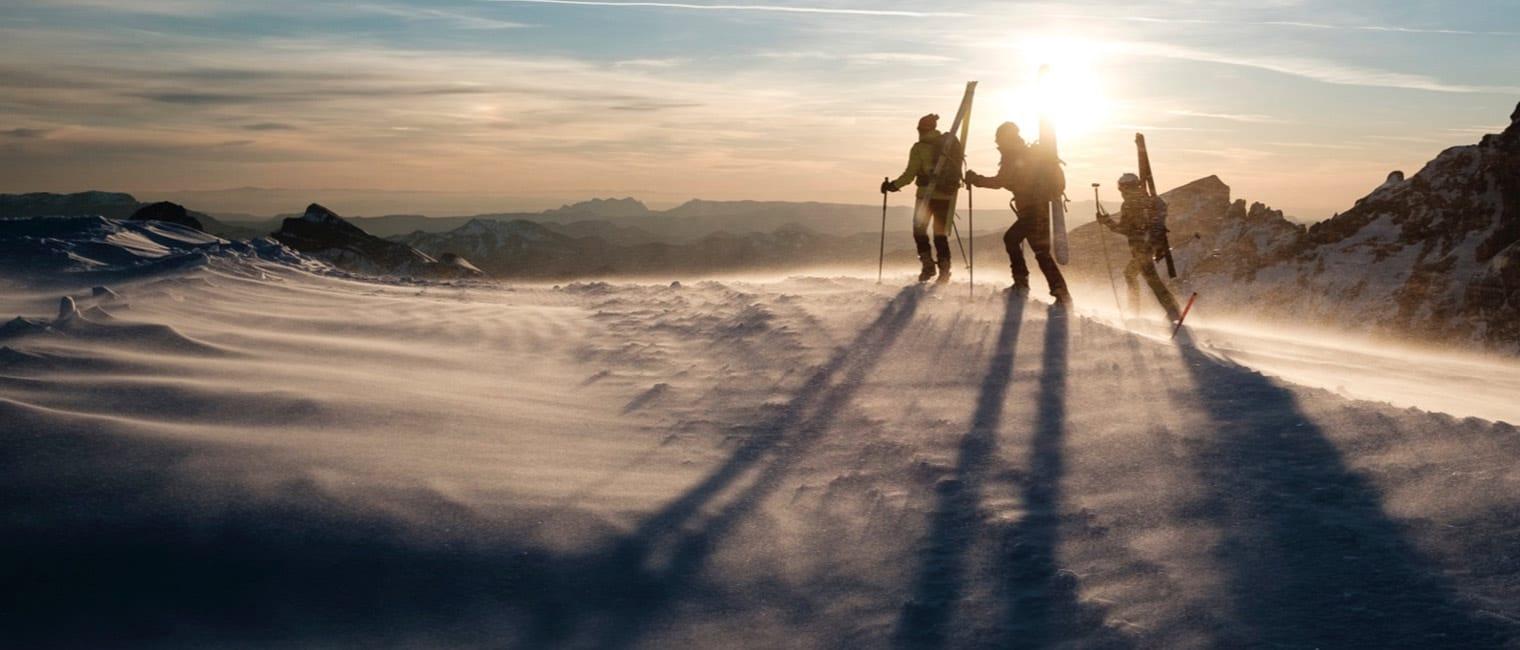
Ski touring is a ski journey that includes the use of skins, sometimes ropes or crampons for safety but ascents of peaks that are walking ascents that do not include technical mountaineering in the climbing or alpinism style of ascent.
Often the terms 'ski touring' and 'ski mountaineering' are used interchangeably but from the insurance perspective, we differentiate 'touring' from 'mountaineering' because technical alpine ascents that combine climbing with ski touring approaches present higher underwriting risks.
The ski mountaineering option should therefore be used if you are engaged in alpinism, technical alpine ascents in winter conditions where you are using traditional ski touring travel to approach your climbs.
Note: snowboarding and split boarding are included within these definitions if accessing back country areas outside of normal resort boundaries.
You should only ski or board in back country areas if you are experienced and carrying the appropriate safety equipment. If you are inexperienced you should only enter back country areas with a guide.
Do not follow experienced skiers or boarders into back country areas if you are not experienced enough yourself. Always seek instruction with guides before going off piste into back country areas for the first time.
The FCDO advises all travellers to have travel insurance to cover emergency medical expenses and repatriation insurance. Although some medical services are provided at no or reduced costs, a proportion of most European medical services are charged for and any private facility requires full payment. In the event of a serious injury or illness, medical costs can be high and if a medically assisted repatriation is required, this can be extremely expensive. https://www.gov.uk/guidance/foreign-travel-insurance
With regards to rescue, even if the SAR team are volunteers and do not charge, the cost of an ambulance to transport you to hospital would be invoiced to the rescued party.